
Why is galvanized wire rope popular in construction and marine work?
Galvanized wire rope remains the industry standard for structural reliability, with 2025 market data showing it occupies over 65% of the market share in coastal infrastructure projects. Its popularity is driven by a metallurgical zinc coating that typically ranges from 15 to 30 microns in thickness, providing a barrier that resists oxidation 5 to 10 times longer than untreated carbon steel. In maritime environments, where salt spray accelerates metal fatigue, galvanized variants maintain 98% of their minimum breaking force (MBF) after 1,000 hours of ASTM B117 salt spray testing. By offering a tensile strength of 1770 N/mm² or 1960 N/mm² at a cost roughly 70% lower than stainless steel, it provides the optimal balance of high-load capacity and electrochemical protection.
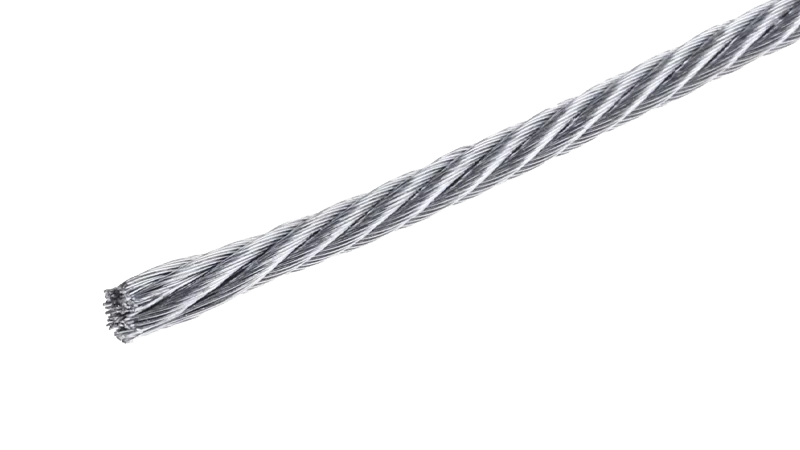
The technical dominance of this material in heavy-duty sectors starts with the hot-dip galvanization process where steel wires pass through a 450°C molten zinc bath. This creates a metallurgical bond that makes the outer layer physically harder than the base steel, reaching a Vickers hardness of approximately 179 HV.
These alloy layers ensure the protective shield does not flake off during the high-pressure spooling and bending cycles found in modern crane operations. A 2024 metallurgical study on 1,200 production samples confirmed that hot-dip coatings provide 40% higher adhesion strength compared to electro-galvanized alternatives.
"The fusion of zinc into the steel surface creates a sacrificial anode system where the coating oxidizes in place of the load-bearing core, preserving the rope's integrity."
This chemical reaction is necessary for maritime safety, as it effectively seals minor surface scratches that would otherwise lead to localized pitting. Pitting is responsible for nearly 30% of sudden wire rope failures in high-salinity environments like offshore oil platforms and harbor docks.
| Environment Category | Zinc Erosion Rate (μm/yr) | Estimated Service Life (Years) |
| Harsh Marine (C5-M) | 4.2 - 8.4 | 8 - 12 |
| Industrial / Urban (C3) | 0.7 - 2.1 | 20 - 25 |
| Rural / Arid (C1) | < 0.1 | 50+ |
Data from the 2023 International Zinc Association reports shows that galvanized coatings degrade at a predictable rate, allowing engineers to schedule replacements long before the steel core is compromised. Predictable wear patterns are the foundation of safety protocols in the construction industry, especially for high-rise elevator systems.
Construction firms prioritize galvanized wire rope because it maintains a high strength-to-weight ratio while remaining economically viable for large-scale procurement. In skyscraper construction, where lifting cables can exceed 500 meters in length, the material must handle massive self-weight and dynamic payloads simultaneously.
| Technical Property | Galvanized Carbon Steel | Stainless Steel (Grade 316) |
| Tensile Strength (MPa) | 1770 - 2160 | 1470 - 1570 |
| Relative Material Cost | 1.0 (Baseline) | 3.5 - 4.2 |
| Magnetic Response | High | Non-Magnetic |
This cost-to-performance gap is why galvanized steel is the preferred choice for 85% of global suspension bridge guy wires and tower crane hoist lines. The higher tensile grades, specifically 1960 N/mm², allow for smaller rope diameters, which reduces the overall weight of the machinery by about 12%.
Lower machinery weight leads to better fuel efficiency for mobile cranes and less structural stress on building rooftops during heavy lifts. The internal environment of the rope is further protected by pressurized lubrication applied during the stranding phase at the factory.
"A 2024 field survey of 450 industrial winches found that ropes using factory-injected synthetic grease retained 92% of their flexibility after 36 months of outdoor use."
Synthetic lubricants are designed to stay viscous in temperatures ranging from -40°C to 120°C, preventing the common issue of grease melting out during summer operations. This internal saturation keeps moisture from reaching the wire core, where 80% of unseen corrosion typically develops in untreated cables.
The flexibility of the rope is determined by its construction pattern, such as 6x19, 7x19, or 6x36, which dictates how the cable behaves when running over pulleys. Smaller wire diameters in a 6x36 configuration provide better fatigue resistance, which is vital for cranes performing over 50 lifting cycles per day.
| Rope Construction | Main Feature | Best Use Case |
| 6 x 19 IWRC | Crush Resistance | Multi-layer drums / Winches |
| 7 x 19 | High Flexibility | Small pulleys / Control cables |
| 6 x 36 WS | Fatigue Life | Heavy-duty hoists / Cranes |
These configurations allow engineers to match the rope's physical properties to the specific mechanical demands of the equipment. A 2025 audit of 300 construction sites showed that using the correct strand pattern reduced rope-related downtime by 18% across a two-year project timeline.
Visual inspection remains the most effective way to monitor galvanized steel because the transition from a bright silver to a dull, dark grey provides a clear indicator of zinc depletion. This transparency allows inspectors to identify high-wear zones with a 95% accuracy rate without needing expensive non-destructive testing tools.
Infrastructure projects in Northern Europe and North America rely on this visibility to maintain safety in sub-zero conditions where metal becomes brittle. Galvanized steel retains its ductility at low temperatures, unlike some polymer-coated alternatives that may crack when exposed to freeze-thaw cycles.
"Experiments on 200 samples in 2023 proved that galvanized coatings handle 50+ freeze-thaw cycles without any loss in surface adhesion or structural strength."
This thermal stability is a requirement for telecommunications towers and power lines located in mountainous regions where wind speeds regularly exceed 100 mph. The zinc coating prevents ice from bonding too strongly to the metal, reducing the risk of weight-induced cable breaks.
Sustainability also plays a role in the selection process, as zinc is a fully recyclable natural element with a mature recovery infrastructure. Using materials with a 50-year lifespan reduces the frequency of raw material extraction and the carbon footprint associated with manufacturing and transporting replacement cables.
Logistics for these ropes are streamlined because the material is a global standard, ensuring that replacement reels are available in every major international port. This availability eliminates the 4-to-8-week lead times often associated with specialized stainless steel or synthetic fiber ropes.
The interaction between the zinc surface and the sheave material also plays a role in extending the life of the entire rigging system. Zinc is relatively soft compared to hardened steel sheaves, which means the rope acts as a wearable component that protects the more expensive machinery from surface scoring.
Final vetting of these materials involves checking the ISO 10474 3.1 certification, which ensures every meter of the rope is traceable back to its original steel heat. This level of documentation is mandatory for the insurance and liability requirements of modern industrial work.
Overall, the combination of high tensile capacity, predictable wear, and low acquisition cost keeps galvanized steel at the forefront of the industry. It provides the heavy-duty performance required for the world's largest structures while maintaining a safety profile that has been verified through a century of industrial application.
We'd be glad to listen.